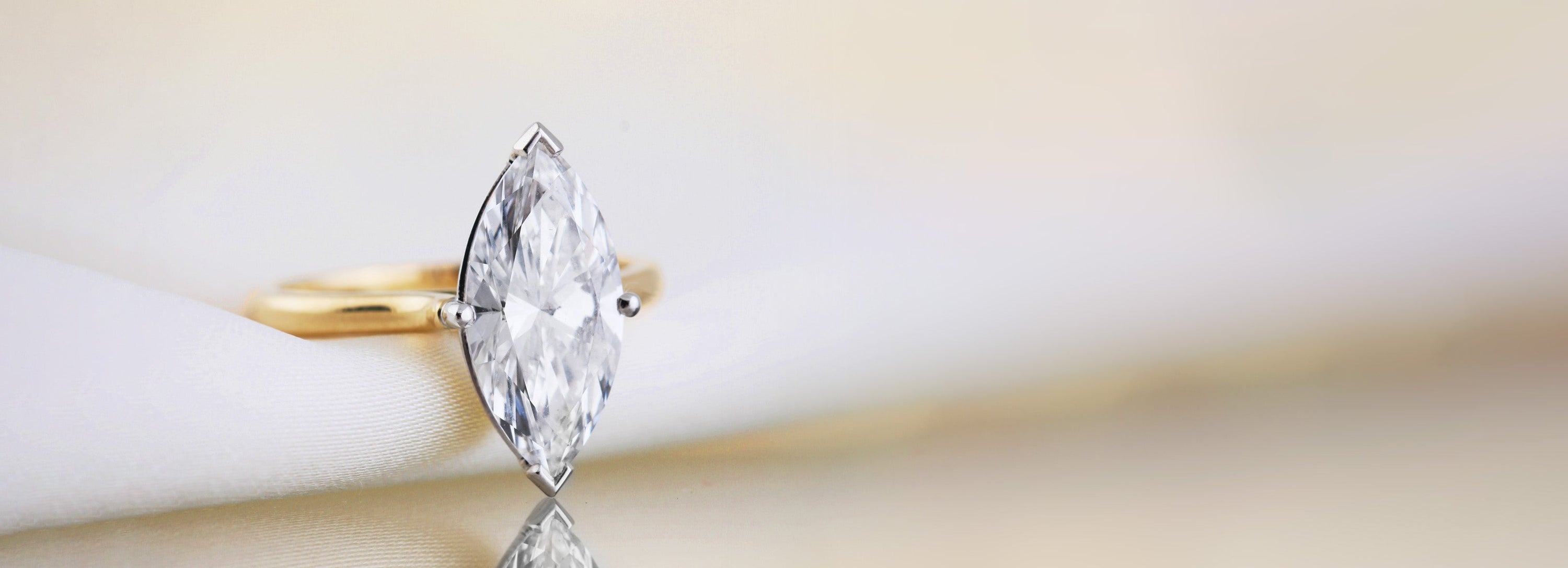
Yellow gold engagement rings have a warmth that can make even a simple diamond setting feel distinctive. Their appeal comes from more than tradition. Yellow gold creates visible contrast around a colourless or near-colourless diamond, complements many skin tones and works comfortably with designs ranging from understated solitaires to detailed vintage-inspired rings.
For UK buyers, the main decision is not simply whether yellow gold looks attractive. The metal purity, diamond shape, setting style, wedding-band compatibility and level of everyday maintenance all influence how the finished ring will look and wear over time.
Why Yellow Gold Works So Well for Engagement Rings
Yellow gold is made by combining pure gold with other metals to improve strength and durability. The resulting alloy retains gold’s characteristic warm tone while becoming more practical for jewellery worn regularly.
Its colour is one of its biggest design advantages. Instead of visually disappearing around the diamond in the way white metals often do, yellow gold creates deliberate contrast. That can make the centre stone appear more defined against the band.
Yellow gold also suits buyers who want an engagement ring with a traditional foundation without being limited to a traditional design. A clean four-prong solitaire can look contemporary, while milgrain, engraving or a halo can push the same metal towards a more vintage aesthetic.
Which Gold Purity Is Best for Everyday Wear?
UK shoppers will often encounter 9ct, 14ct and 18ct gold. The carat number refers to the proportion of pure gold in the alloy, not the weight of the ring or diamond.
18ct yellow gold contains a higher proportion of pure gold and typically has a richer yellow appearance. Lower-carat alloys contain more additional metals, which can make them harder and alter the exact shade of yellow.
There is no universally correct choice. A buyer who prioritises a richer gold colour may prefer 18ct, while someone focused heavily on durability and budget may consider another alloy. The quality of construction matters as well. A carefully made ring in an appropriate alloy can be better suited to daily wear than one chosen solely because of its gold purity.
UK jewellery should also carry the lab grown diamonds hallmark where required, giving buyers a practical way to verify the precious-metal fineness of the piece.
Choosing a Diamond Shape for Yellow Gold
Yellow gold works with almost every major diamond shape, but the pairing changes the visual character of the ring.
Round brilliant diamonds create the most familiar contrast between a bright centre stone and warm metal. Oval and pear-shaped diamonds bring a more elongated look, which some buyers prefer because the stone can appear visually larger across the finger.
Emerald and Asscher cuts create a different effect. Their step-cut facets produce broader flashes of light rather than the busier sparkle associated with brilliant-cut diamonds. Against yellow gold, these shapes can feel particularly architectural or vintage-inspired.
Cushion cuts sit somewhere between classic and romantic. Their curved outline works naturally with yellow gold, especially in solitaire, halo and pavé settings.
Rather than selecting a diamond by shape alone, compare its face-up dimensions and proportions. Two diamonds with the same carat weight can present quite differently once viewed from above.
Does Diamond Colour Matter More in Yellow Gold?
The metal surrounding a diamond can influence how its colour is perceived. Yellow gold naturally introduces warmth around the stone, so some buyers find that they are comfortable considering a broader range of diamond colour grades than they might with an all-white setting.
The design of the setting matters, however. If yellow-gold prongs sit directly against the diamond, they may add visual warmth near its edges. Some rings use a yellow-gold band with white-metal prongs to create greater visual separation between the centre stone and the shank.
This can be useful for someone who likes the warmth of yellow gold but wants the centre diamond to retain a cooler appearance.
Colour should therefore be judged in the context of the complete ring rather than treated as an isolated grading number.
Which Settings Suit Yellow Gold Best?
A solitaire remains one of the most flexible choices because it keeps attention on the centre diamond and allows the gold band to form a clean frame around it.
A pavé setting adds smaller diamonds along the shoulders, giving the ring more surface sparkle. Halo settings place a border of smaller stones around the centre diamond, creating a more elaborate appearance and increasing visual presence.
Bezel settings surround much or all of the diamond’s edge with metal. They can suit buyers who prefer a smoother profile or want more protection around the stone, although they show more metal than a prong setting.
Buyers researching yellow gold engagement rings through specialists such as novitadiamonds.co.uk can compare how solitaire, halo and pavé designs change the balance between the diamond, setting and yellow-gold band before settling on a final style.
Lab-Grown Diamonds and Yellow Gold
Lab-grown diamonds can be set in yellow gold in exactly the same broad range of engagement-ring styles as mined diamonds. They share the same essential crystal structure and can be evaluated using familiar characteristics such as cut, colour, clarity and carat weight.
For many buyers, this creates more flexibility when balancing centre-stone size, quality and overall ring budget.
Certification or an independent grading report remains useful because it documents the characteristics of the individual diamond. Buyers should review the diamond itself as well as the report. Cut quality, proportions and visible appearance often matter more to the final look of an engagement ring than chasing a particular grade simply because it appears stronger on paper.
Plan for the Wedding Band Before Choosing the Setting
One detail that is easy to overlook is how the engagement ring will sit beside a future wedding band.
Some engagement-ring settings allow a straight wedding band to sit flush against the shank. Others have low-set baskets, halos or decorative details that create a small gap. Neither result is necessarily a problem, but it is worth knowing before purchase.
A curved or shaped wedding band can be designed around a more complex engagement-ring profile. Buyers who prefer a completely flush bridal set should check the side view of the setting before making their decision.
Matching the gold alloy can also help the two rings wear more consistently when they are regularly in contact.
What to Check Before Buying
A strong choice balances appearance with practical wear. Before ordering, look beyond the centre stone and assess the ring as a complete piece.
Check that the setting gives the diamond enough security for the wearer’s routine. Consider whether a high-profile centre stone could catch on clothing. Look at the thickness of the band, especially if the design contains pavé diamonds or fine detailing.
It is also worth checking:
- the gold carat and hallmarking
- the diamond grading documentation
- the ring’s resizing limitations
- whether the setting works with a straight wedding band
- the return, warranty and aftercare terms
- whether replacement or repair services are available
Small design details can have a larger effect on long-term satisfaction than a minor difference between two diamond grades.
Caring for a Yellow Gold Engagement Ring
Yellow gold does not require rhodium plating to maintain its colour, unlike many white-gold designs. It will still develop fine surface marks with regular wear, particularly on polished areas.
Gentle cleaning with suitable jewellery-care methods can remove everyday build-up around the diamond and setting. More importantly, the ring should be inspected periodically for loose prongs, worn claws or movement in the centre stone.
Removing the ring during activities that involve hard impact, chemicals or abrasive surfaces can also reduce unnecessary wear.
A well-chosen yellow gold engagement ring should work visually on the first day and practically for the years that follow. The strongest designs tend to be those where the metal, diamond, setting height and future wedding band have been considered together rather than selected as separate decisions.