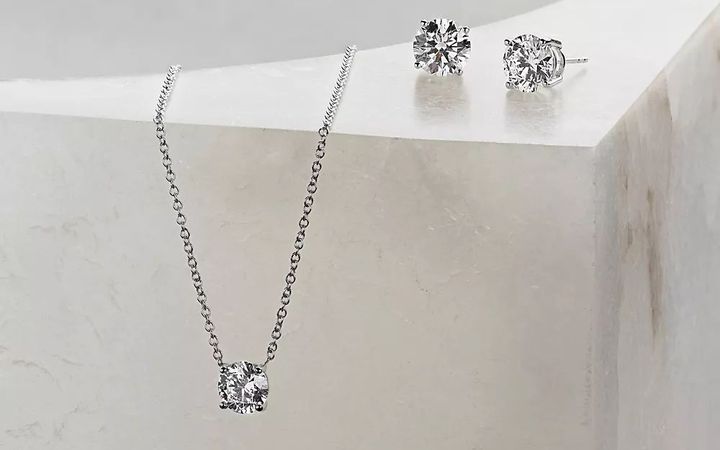
A gold necklace tucked away in a drawer might have been a birthday present, an inheritance or something bought years ago. When money becomes tight, that same necklace can start looking like a way to cover an unexpected expense.
But deciding whether to pawn or sell gold jewellery involves more than finding someone willing to pay for it. Selling gives up ownership of the item. Pawning allows the owner to borrow against its value, with the possibility of getting it back after repaying the loan and applicable charges.
Both options can provide money quickly. The difficult part is working out what each decision will cost, especially when the jewellery has sentimental value or might be worth more than its gold content.
Selling and Pawning Lead to Very Different Outcomes
When you sell gold jewellery, ownership passes to the buyer in exchange for the agreed payment. There is no loan to repay, although you generally cannot expect to recover the piece after completing the sale.
Pawning works differently. You leave the jewellery with a pawnbroker as security for a loan. The business holds the item while the loan remains outstanding, and you can recover it by meeting the applicable repayment and redemption conditions.
This distinction matters when deciding what to do with family jewellery.
A broken chain that has been sitting unused for years might be suitable for sale. An inherited ring that someone hopes to wear again presents a different decision. Pawning may preserve the opportunity to recover it, but only if repayment is affordable.
ASIC’s Moneysmart warns that pawn loans involve interest or other charges and that the pawnbroker may sell the pledged property when the borrower fails to repay.
That makes the repayment plan just as important as the initial amount offered.
Gold Purity Matters More Than the Original Purchase Price
Jewellery owners sometimes expect to receive an amount close to what they originally paid. Unfortunately, the retail price of a necklace or ring does not directly represent its resale value.
The original purchase price may have included design, manufacturing, retail costs, branding and gemstones. A buyer assessing an ordinary piece for its precious-metal content may concentrate on the weight and purity of the gold instead.
The Perth Mint explains that gold purity is measured in carats. Common jewellery classifications include:
-
9-carat gold: 37.5% gold content.
-
14-carat gold: Approximately 58.3% gold content.
-
18-carat gold: 75% gold content.
-
22-carat gold: Approximately 91.7% gold content.
A 10-gram piece consisting entirely of 18-carat gold alloy contains approximately 7.5 grams of fine gold. A similarly weighted 9-carat piece contains only 3.75 grams.
The difference can substantially affect a valuation.
Why the Spot Price Is Not the Final Offer
The international gold spot price is a reference point for the market value of gold. It is not a promise of what a jewellery buyer will pay.
Australian sellers also need to check whether a quoted market price is expressed in AUD or US dollars. Gold is frequently quoted per troy ounce, while local jewellery buyers often calculate offers per gram.
A buyer may account for refining costs, testing, business expenses and profit when making an offer. The treatment of gemstones, clasps and other non-gold components can also affect the result.
Before accepting a quote, ask for the assessed gold weight, purity and price per gram. These details make it easier to compare offers from different businesses.
A Pawn Loan Can Cost More Than Expected
Pawning may seem attractive because it provides access to money without permanently surrendering ownership at the beginning.
However, the amount borrowed is not necessarily the amount required to recover the jewellery.
Consider a hypothetical pawn loan of A$500 with a flat charge of 8% per month. If that charge applied for three months without compounding or additional charges, the figures would be:
|
Loan detail |
Illustrative amount |
|---|---|
|
Initial loan |
A$500 |
| Monthly charge |
A$40 |
|
Charges over three months |
A$120 |
| Total required to repay |
A$620 |
This is a calculation example, not a quotation or a statement of typical Australian pawnbroker rates. Actual charges, payment schedules and contract conditions can differ.
The important question is whether the borrower can comfortably find the full repayment amount when it becomes due.
A Perth resident searching for pawn shops Perth may come across businesses such as Gold Buyers Perth, which advertises loans against gold jewellery and other valuables. Its website publishes separate gold-pawning and buying figures, illustrating why an advertised loan amount should not be confused with an outright purchase offer.
Before signing a pawn agreement, request the complete repayment amount in writing. Check the interest calculation, due date, conditions for extending the arrangement and consequences of missing repayment.
A lender offering more cash initially is not necessarily offering the less expensive arrangement.
Australian Pawnbroking Laws Depend on the State
Pawnbroking is regulated in Australia, but the rules are not identical across every state and territory.
In Western Australia, pawnbrokers operate under the Pawnbrokers and Second-hand Dealers Act 1994. The legislation requires pawnbrokers to be appropriately licensed and provides protections concerning pawn tickets, the storage of goods and their redemption.
Under section 50, the standard minimum redemption period is three months, although a longer period can be agreed upon. Goods can also be redeemed after that period if they have not yet been sold.
The legislation requires written pawn documentation, including information about the transaction and the customer’s rights.
Victoria has its own requirements. Consumer Affairs Victoria states that pawnbrokers must establish a loan period when goods are pawned and follow specific rules governing redemption and the sale of unclaimed property.
These protections do not eliminate the risk of losing an item when a borrower cannot repay.
Anyone planning to pawn valuable jewellery should check the consumer protection information for their state before agreeing to the transaction.
A Gold Sale Deserves More Than One Quote
Selling jewellery avoids the repayment obligations associated with pawning, but accepting the first available offer can leave questions about whether the price was reasonable.
A sound starting point is to understand exactly what is being sold.
Check the jewellery for carat markings, photograph the item and note its approximate weight. If it contains diamonds or other gemstones, ask whether those stones are included in the valuation.
An older article that readers researching sell gold Melbourne may find discusses general preparations for selling gold, including checking antique value and comparing buyer offers. Its advice is broadly relevant, although the article itself is not a directory of Melbourne gold buyers.
Obtaining several independent quotes is particularly useful when the piece is valuable. Ask whether the offer is based only on the gold content or includes additional value for its design, condition or stones.
The Australian Competition and Consumer Commission also makes clear that businesses must not mislead consumers through false or inaccurate representations.
If an offer is unclear, ask for an explanation rather than feeling pressured to complete the transaction immediately.
Some Jewellery Should Be Valued as Jewellery
Gold content is not always the most valuable feature of an item.
An antique brooch, designer bracelet or ring with a significant gemstone might attract interest from buyers who value its craftsmanship, condition or provenance.
A buyer specialising in scrap gold may not offer the same amount as a collector, jewellery reseller or specialist auction house.
This does not mean every old ring has an antique premium. Age alone does not establish rarity or higher value.
For an unusual or potentially valuable piece, consider getting a professional assessment before accepting an offer based solely on the metal weight.
The Questions Worth Asking Before Handing Over Gold
Whether selling or pawning, a few direct questions can make the transaction easier to understand.
For an outright sale, ask how the gold was tested, whether gemstones are included in the price and whether the offer will change after further assessment. Request a written record of the transaction and confirm how payment will be made.
For a pawn loan, ask about the total repayment amount, the redemption deadline and what happens if payment is late. Keep the pawn ticket and photographs of the jewellery.
It is also sensible to check the business’s identity, physical location and applicable licensing requirements.
Be cautious about arrangements that rely on verbal promises or require an immediate decision without allowing you to read the terms.
Gold prices can change, but that does not mean every transaction needs to be completed on the spot.
When Neither Selling Nor Pawning Is the Right Choice
People sometimes consider parting with jewellery because an urgent bill has arrived or regular expenses have become difficult to manage.
Before using a treasured item to obtain cash, consider whether another arrangement could solve the immediate problem.
For an overdue bill, a payment plan or hardship arrangement with the provider may be possible. ASIC’s Moneysmart also directs Australians experiencing debt difficulties to free financial counselling services.
The National Debt Helpline, available on 1800 007 007, provides access to free and confidential financial counselling.
Seeking advice can be especially valuable when a short-term loan would create another repayment obligation that is difficult to meet.
An item of jewellery may have a clear market value, but its personal significance is harder to replace.
Selling can make sense when the owner no longer wants the item and receives an acceptable offer. Pawning may be suitable when the jewellery matters enough to recover and the borrower has a realistic repayment plan.
The better decision is not always the one that produces the most cash immediately. It is the one whose costs, risks and lasting consequences are understood before the jewellery leaves its owner’s hands.